


Dear Friends,
August 9 marks two years since the fire that took our church building. It is a solemn anniversary that allows us to reflect both on the loss of our church home and on the steady work that your Building Committee—tasked with overseeing planning, development, and construction—has been engaged in to envision and develop our new church home. Behind the scenes, a great deal of prayerful and careful work has been underway. To that end, on behalf of the Building Committee, I’d like to walk you through what these two years have held in terms of key milestones and where we are headed next.
The Immediate Aftermath (Late Summer/Early Fall 2024)
In the first weeks after the fire, our attention turned to the difficult but necessary work of understanding what had happened and caring for what remained.
- We worked closely with county officials on the investigation into the cause of the fire.
- We opened a dialogue with various county departments and leaders about the future of our church structure, taking into consideration the county regulations to determine what the path forward may look like.
- We carefully worked to salvage items from within the building that could be preserved for future use.
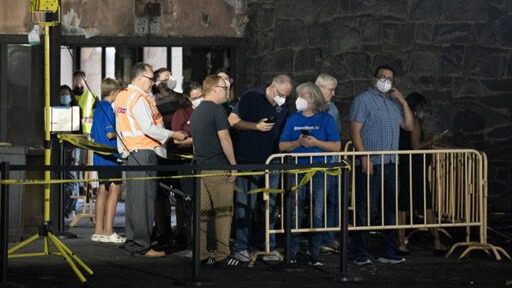
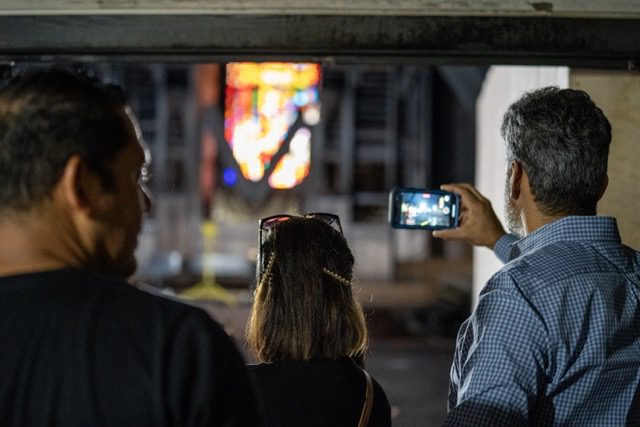
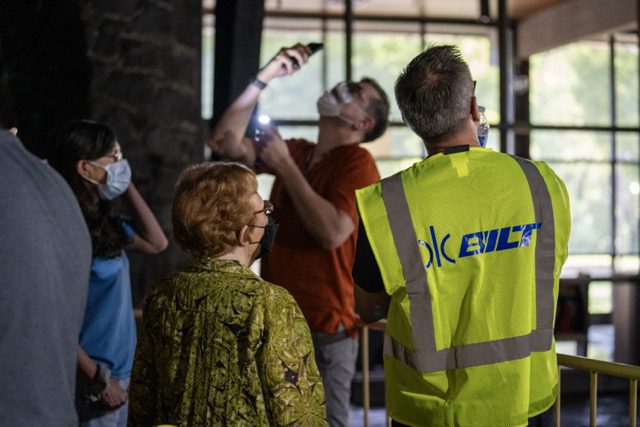
- And we organized a walkthrough for church members, giving our congregation the chance to survey the damage and begin, together, to grieve and to hope.
Laying the Foundation (Late Fall 2024)
Before a single decision was made, we knew we needed to set up an administrative structure to guide all that was to come. A rebuild of this magnitude needs clear governance and a shared sense of direction.
- The Church Board named and elected a Building Committee, drawing together stakeholders and subject-matter experts from within our own congregation.
- The Church Board defined our Terms of Reference, clarifying the Committee’s authority and how the Committee relates to the Church Board and the wider membership.
- We developed a strategic direction whose themes and goals now anchor every decision we make, keeping us aligned to our mission, vision, and goals at each step.
- On a financial note, the insurance proceeds were placed into safe, interest-bearing accounts managed by our Finance Committee. I’m pleased to share that, to date, we’ve earned several hundred thousand dollars in interest.
Listening to the Congregation (Winter/Spring 2025)
Knowing how much our members have invested in the ministry of the Spencerville Church over the years, one of our very first acts as a Building Committee was to hear from you directly.
- We began developing a congregational survey in February and administered it in March 2025, inviting the whole church to help shape what our future facilities and ministries should become.
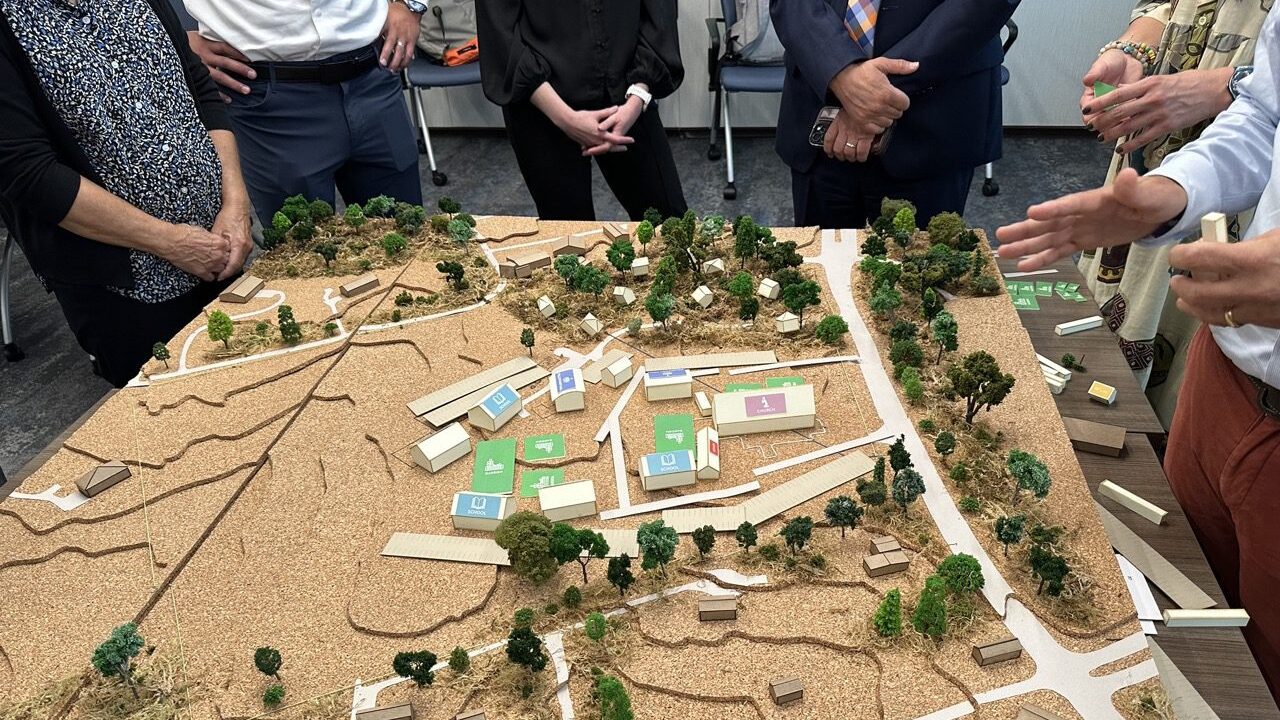
- That input grew into something far larger than a building. It became a comprehensive vision for our entire 38-acre property, one that imagines not only a new church structure, but the thoughtful use of our resources, including walking trails and a vision for a potential new home for Spencerville Adventist Academy. To make this dream of a unified campus a reality requires intensive planning, both today and in the years ahead.
Building Our Team of Partners (Late Spring/Summer 2025)
A project of this scale requires seasoned guidance, and we chose our partners prayerfully and carefully, interviewing and vetting multiple candidates in every category before making a decision.
- A project management firm became our first and most essential partner, bringing deep experience managing the details of large commercial projects and equally deep familiarity with Montgomery County.
- A demolition firm was selected next, since our previous structure had to be safely taken down before anything new could rise.
- With the assistance of our project management firm, we then brought on an architectural firm, a civil engineering firm, a land use attorney, a permit expeditor, and a pre-construction (pre-con) firm (to estimate construction costs against our final design). Each vendor was selected only after the committee vetted and weighed multiple strong options.

Demolition Planning and Early Design (Summer/Fall 2025)
- Preparatory work had to be completed prior to demolition, including removal of the septic system, asbestos abatement, and disconnection of all utility service to the property.
- Montgomery County’s permitting process is rigorous, and it took many months of diligent effort to satisfy the many requirements before we could begin, such as an approved sediment and erosion control plan.
- Even as the old structure came down, the work of imagining the new one was beginning! Last October 6, our architects, The Intec Group, led a series of intentional visioning meetings, drawing out our congregation’s preferences for look and feel, aesthetic and function. Together we studied images of past projects and explored how nature and structure might live in harmony across our property, and which architectural design approach would be the best fit for the Spencerville Church.
Demolition and Design & Planning (First Part of 2026)
From there, our attention turned to managing the demolition process and the space planning needs of the new church building, including the sanctuary, fellowship hall, Sabbath School rooms, and administrative offices.
- Our demolition permit was approved on January 16, 2025, and the demolition work began on January 30. The team made quick work of the project, concluding in February.
- Meanwhile, we formed work groups of church members to give voice to specific design areas, including music, media, acoustics, children’s ministries, youth and young adult Sabbath School, and hospitality.
- Each work group reported back to the Building Committee, and our architects devoted an entire day to listening closely to their needs and hopes.
- This rich input has now been shaped into a master campus plan and an initial space plan, built around a square footage thoughtfully sized to serve our congregation well into the future.
- Meanwhile, in March of this year, our civil engineering firm finalized soil grading plans, preliminary stormwater management areas, and a forest conservation plan in line with county requirements.
- The firm also engaged in soil boring analysis during April and May to assess whether our architectural plans would align with the geotechnical conditions and realities of our property.
- We’ve also opened discussions related to the replacement of our organ. An advisory group of craftsmen and musicians—all experts in this area—has been convened to evaluate our options. Currently, the group is evaluating two paths: restoring a used instrument to suit our needs or commissioning a new instrument.
- Finally, for the county to officially recognize our completed demolition, we are required to successfully grow grass over the demolished footprint to ensure soil stabilization–a greater challenge than we imagined. Efforts beginning in June and July have been led by our Head Deacon, Tom Henkel, along with several other generous and knowledgeable volunteers. Though the conditions are challenging, by God’s grace, the grass has started to grow. Please continue to pray about this, as this is the final step needed to close out the demolition process.
What Comes Next?
We now stand at an exciting threshold, with several meaningful milestones just ahead:
- Our two-dimensional plans will be developed into three-dimensional renderings, and our work groups will once again be invited to validate the finer details.
- This month, we will submit our preliminary plan to Montgomery County, a substantial achievement that bundles required elements such as soil erosion control, forest conservation, geothermal, traffic control, fire access, and sewage plans. All of these items work together to gain the county’s approval to move forward.
- We expect to receive our pre-con firm’s estimated cost for the rebuild soon; an important marker for us all as we plan responsibly.
- A dedicated team has already been formed to lead our fundraising efforts and is thoughtfully beginning to structure our approach for meeting this goal together.
These are the highlights, among many more past and ongoing processes and details. In the end, none of this would be possible without all of you. I am deeply grateful to Pastor Chad, Pastor Jason, and the rest of our pastoral staff; our Building Committee members, workgroups, and Committee vice-chair Mark Noble for their tireless and often unseen service. I am additionally grateful to the members whose continued generosity has carried us this far; and to our entire congregation for your patience, your prayers, and your unwavering faith over these two years.
God has indeed been faithful at every turn, and we will do our part, continuing to move forward together faithfully and prayerfully; ultimately trusting God with the successful completion of this project for the benefit of his Kingdom, our congregation, and our community.
Sincerely,
Costin Jordache
Building Committee Chair
